“You Keep That Poor Song”: How Loretta Lynn’s Tough Love Saved Dolly Parton’s “Coat of Many Colors”
OPINION: This article may contain commentary which reflects the author's opinion.
In the annals of country music history, few songs capture the heart of the genre like Dolly Parton’s “Coat of Many Colors.” The song, a deeply personal story about her childhood in rural Tennessee, stands as a timeless testament to love, humility, and resilience. But what many fans don’t know is that this beloved anthem almost never saw the light of day—and it took the fierce friendship of another legend, Loretta Lynn, to make sure it did.
A Song Rejected Six Times
When Dolly Parton first brought “Coat of Many Colors” to her record label and longtime collaborator Porter Wagoner, the reception was far from enthusiastic. The song, written on the back of a dry-cleaning receipt during a tour, was deemed “too slow,” “too sentimental,” and not commercially viable for radio.
For Parton, the repeated rejections—reportedly up to six times—were crushing. The song wasn’t just another single; it was a piece of her soul, drawn from memories of her mother stitching together a coat from rags, and the love that made poverty feel like wealth.
The Whiskey and the Wisdom
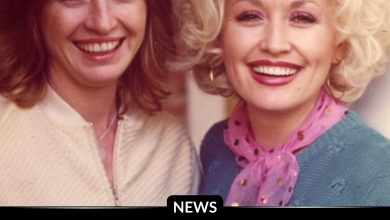
Enter Loretta Lynn, already a formidable force in Nashville thanks to her autobiographical hit “Coal Miner’s Daughter.” Hearing that her friend was heartbroken over the industry’s cold reception, Lynn showed up unannounced at Parton’s door, carrying a single bottle of whiskey and an unshakable dose of perspective.
As the story goes, she poured a drink, looked Dolly in the eye, and delivered one unforgettable line:
“You keep that poor song, and I’ll drink the whiskey.”
It was classic Loretta—direct, grounded, and full of truth. Beneath the humor was a message every artist needs to hear at least once: trust your heart, not the suits. Lynn knew the struggle of getting personal songs past industry gatekeepers, and she wasn’t about to let her friend abandon one of her best.
The Redemption and the Reward
Bolstered by Lynn’s encouragement, Parton stood her ground. “Coat of Many Colors” was finally recorded and released in 1971—and it soared. The song reached No. 4 on the Billboard Hot Country Singles chart and became one of Parton’s most cherished works.
Today, it’s more than a hit; it’s an emblem of her legacy. The song has been covered countless times, adapted into a television film, and even preserved by the Library of Congress for its cultural significance.
And in every retelling, Loretta Lynn’s role remains central—the friend who refused to let a masterpiece stay hidden in a drawer.
A Bond Forged in Roots and Resilience
Dolly Parton and Loretta Lynn shared more than fame—they shared parallel stories. Both were born into large, working-class Appalachian families. Both built their success on songs drawn from their own lives. And both defied an industry that often underestimated women’s voices, insisting that personal truth could be powerful, even profitable.
Their friendship, rooted in mutual respect and mountain-born grit, stands as one of country music’s greatest testaments to sisterhood.
The Legacy Lives On
“Coat of Many Colors” remains Dolly Parton’s personal favorite among her hundreds of songs. Its message—that love is more valuable than wealth—has resonated with generations of listeners.
But behind its enduring warmth lies a quieter story: one of mentorship, courage, and a bottle of whiskey shared between two country queens. Loretta Lynn didn’t just save a song that night—she helped preserve a piece of American music history.